Haply MinVerse and Inverse 3: Goodbye 2D Mouse, the Future is 3D (for Certain Uses)
Italian tech outlet DDay.it reviews Haply's CES 2025 line-up: the MinVerse haptic 3D mouse — winner of a Best Innovation award — and the professional Inverse3 controller, with 0.01 mm resolution and a 4 kHz refresh rate for precision 3D work.
Originally published on haply.co — the canonical version of this article.
A Best Innovation award for precision 3D pointing
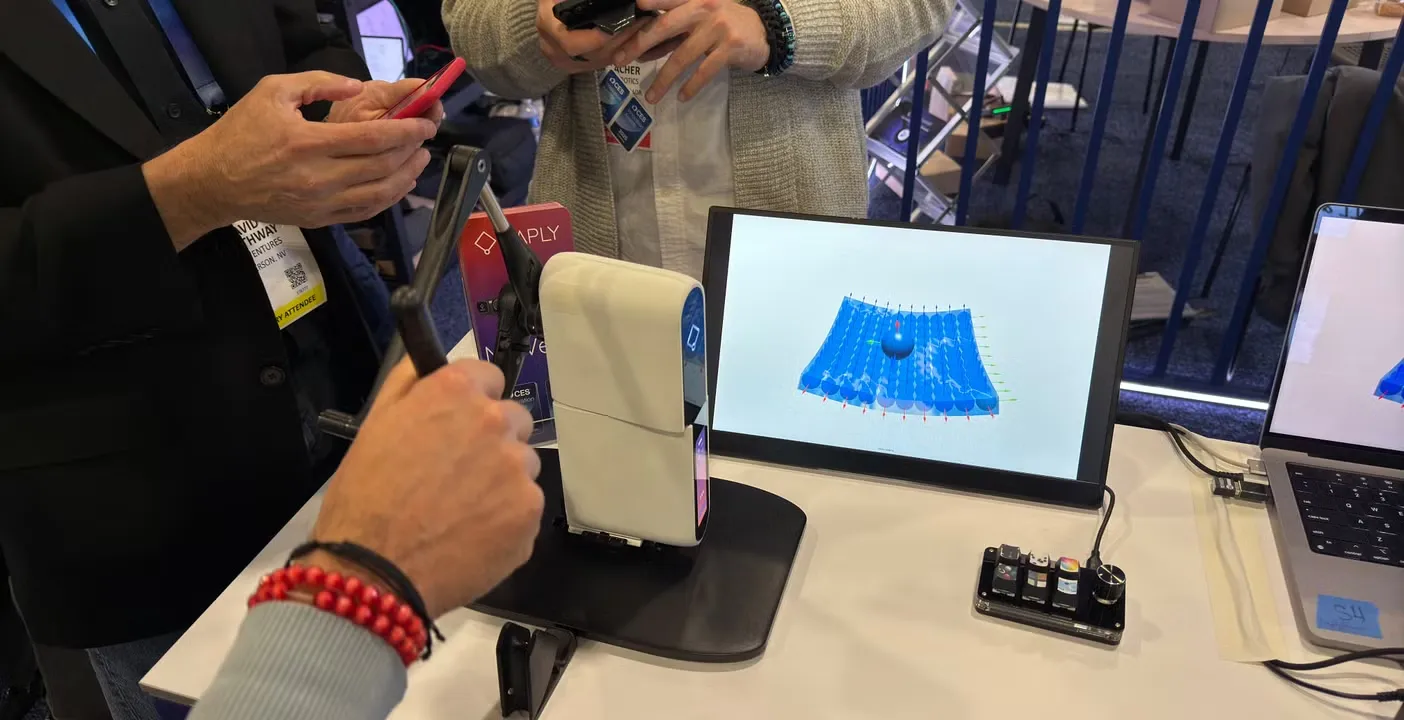
DDay.it profiles Haply as a maker of highly innovative 3D pointing systems, recognized at CES with a Best Innovation award for its consumer product, the MinVerse. The article’s premise: VR controllers are fine for gaming and casual use but lack the precision professional software demands — a criticism it extends to hand-tracking devices like the Apple Vision Pro — while the traditional mouse cannot move a cursor through space. MinVerse and Inverse 3 answer that gap with a system of articulated joints: you hold the controller (pen, mouse, or other device) and move it through space, constrained by a series of arms that deliver a precision free-floating controllers cannot match.
MinVerse: a haptic 3D mouse for everyone
The review describes the MinVerse as a 3D mouse with haptic feedback designed to revolutionize interaction with both 3D and 2D applications — built for designers, artists, and gamers, and customizable with accessories such as a 2D mouse, VR controller, stylus, gun, and trackball. It is compatible with software including Blender, RoboDK, and HARP, and offers open-access APIs for the developer community. DDay.it notes the MinVerse was on pre-sale at $750, with a crowdfunding campaign planned for the end of Q1 2025 and a final price expected around $1,500.
Inverse3: professional-grade force feedback
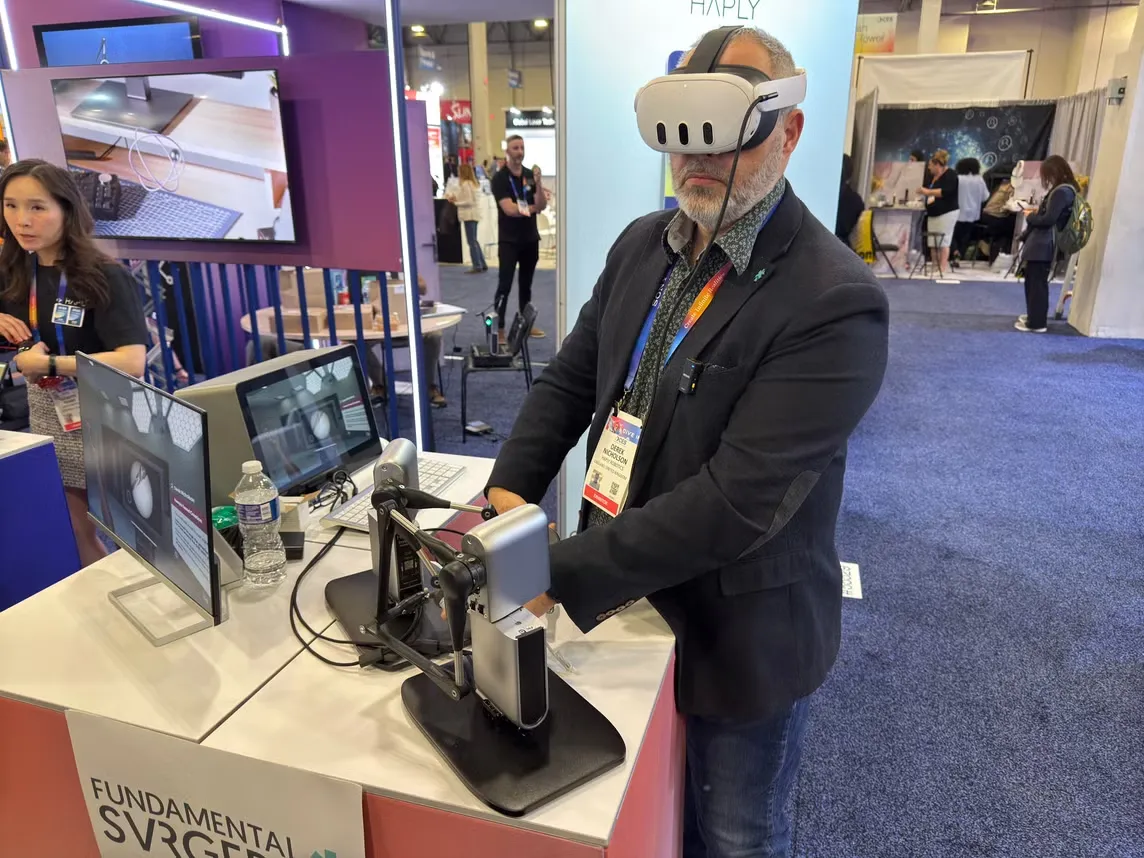
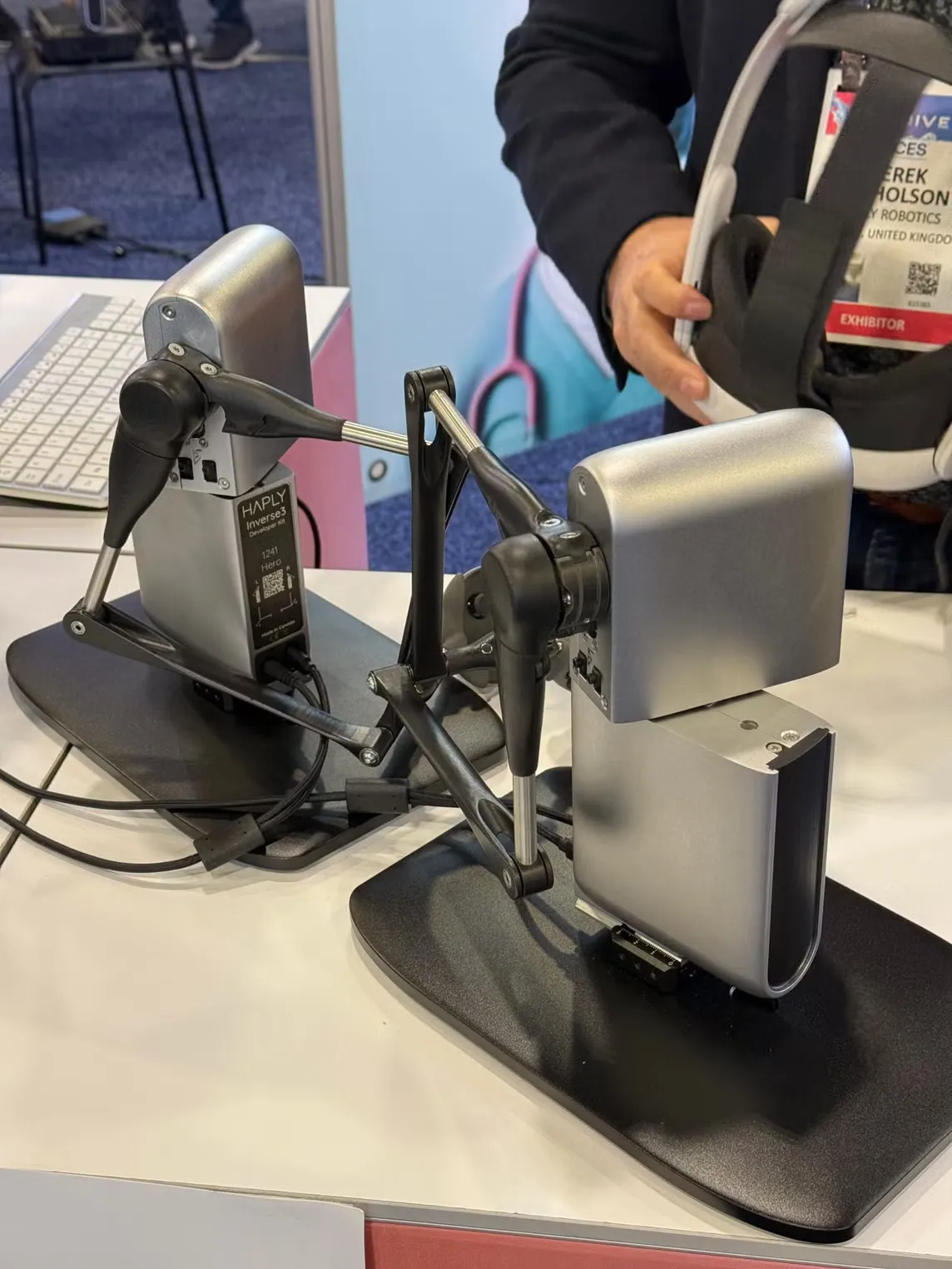
The Inverse3 is presented as a professional precision haptic controller offering resolution down to 0.01 mm and a 4 kHz refresh rate — accuracy suited to surgical simulation and micro-manufacturing, as well as robotic systems and manipulators requiring constant interaction. It supports multiple technologies, programming languages, and game engines, works with accessories such as VerseGrips and VerseMounts, allows up to two devices to be used simultaneously, and can be reoriented in real time to match the user’s size and reach. Its cost exceeds $10,000, aimed squarely at professional use.
A window onto the future of pointing devices
While noting the devices’ prices are certainly high, DDay.it concludes that Haply’s technology opens a window onto what pointing instruments could become when — and if — spatial computing replaces today’s two-dimensional screens.
▶ Watch: MinVerse demo video (YouTube)
Read the original coverage
The full article (in Italian) is available on DDay.it.