UC-01 / ROBOTICS & TELEOPERATION
Feel what the robot feels.
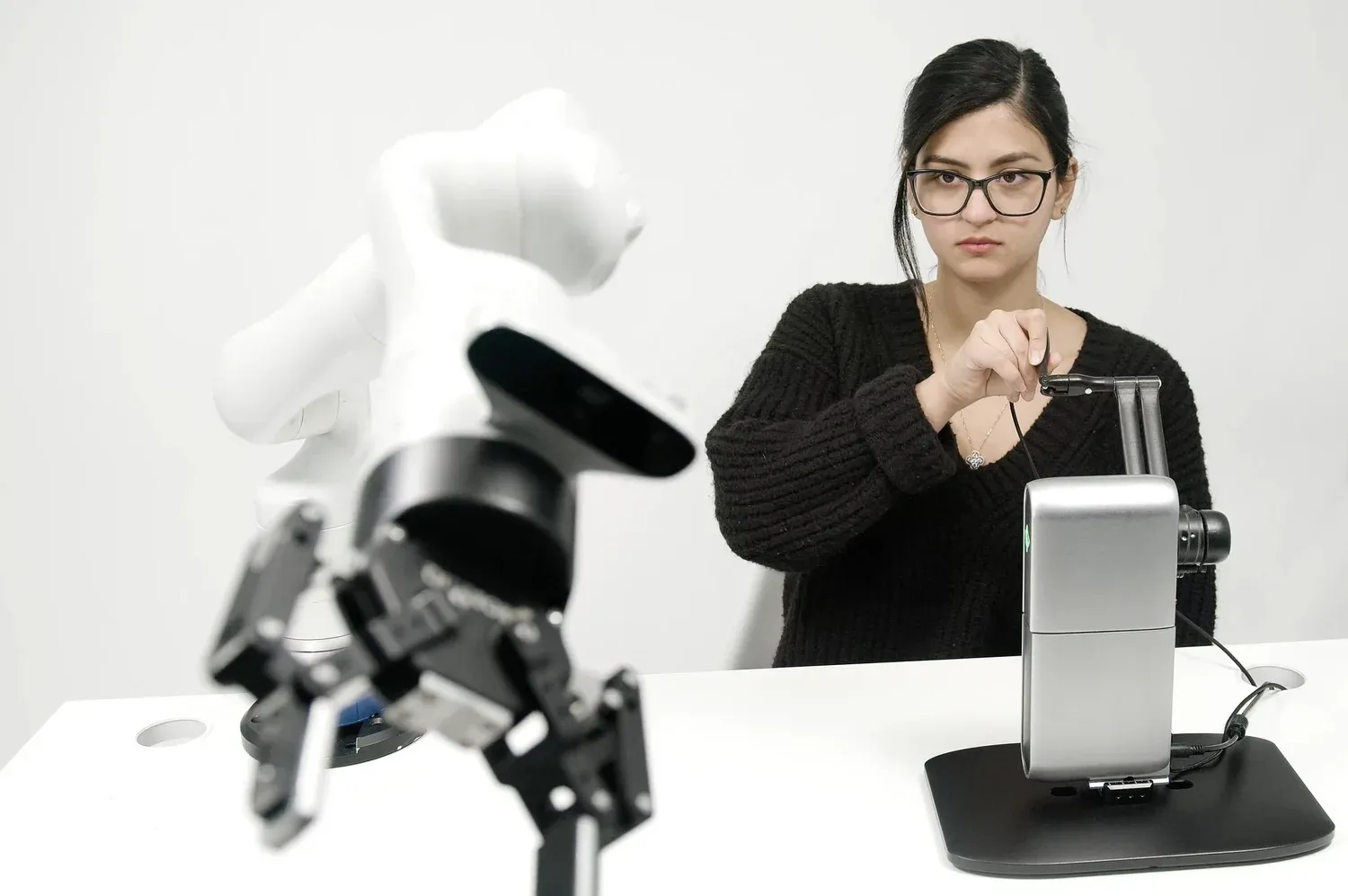
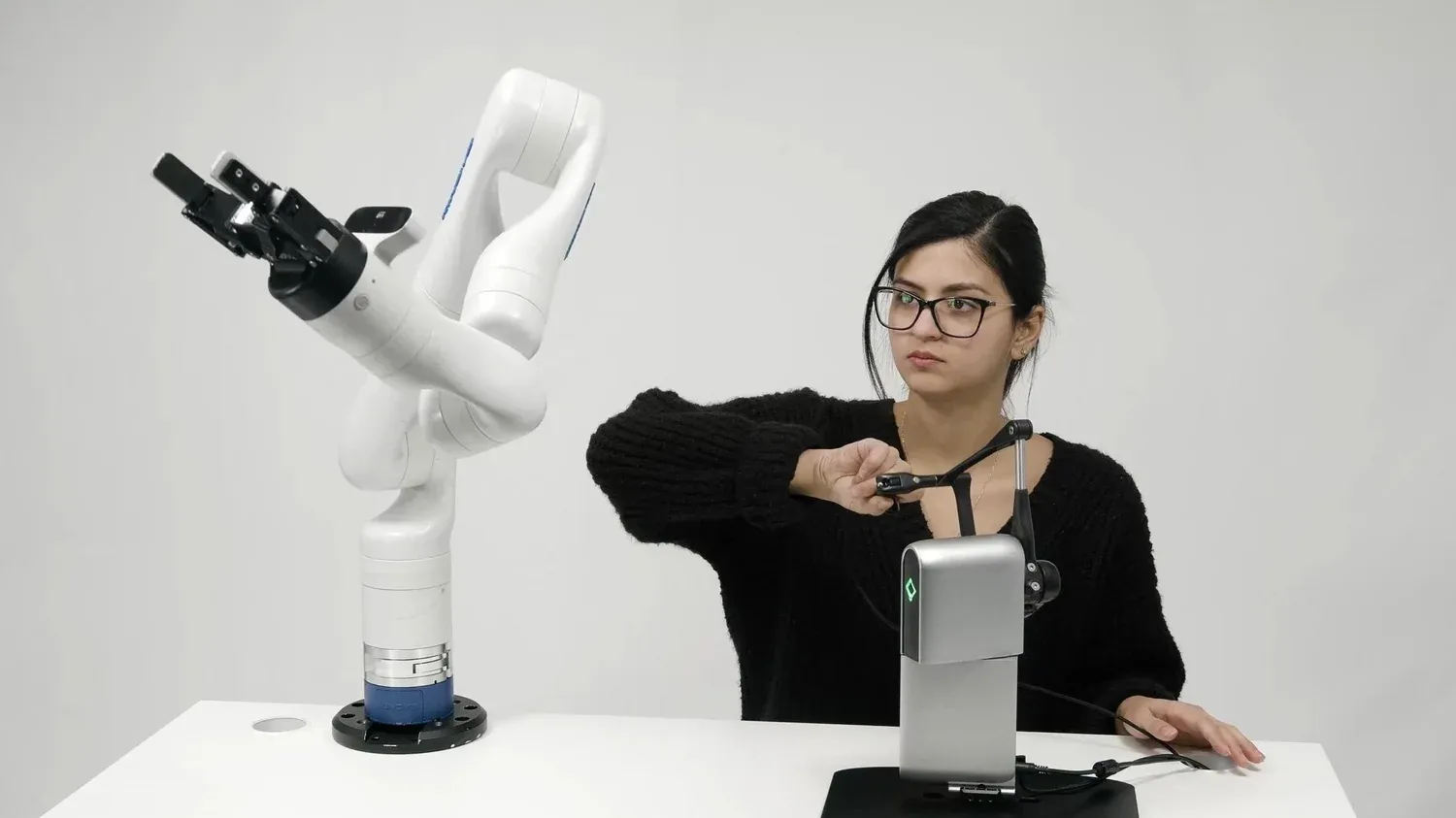
Haply haptic controllers give robotics teams force-aware control of robotic arms and remote systems — a more natural control path for operators, and the force data Physical AI training needs.
4 kHz
force-control loop between operator and robot
0.01 mm
positional resolution for fine manipulation
6-DOF
input — position and rotation with VerseGrip
THE WORKFLOW
Teleoperation with a sense of touch.
Haptic teleoperation lets operators control remote robotic systems while feeling cues such as contact, resistance, motion, and position. Remote robot control becomes physical and responsive instead of visual-only — from delicate manipulation to hazardous-environment work.
ROBOT ARMS · MOBILE ROBOTS · DRONES · REMOTE SYSTEMS · PHYSICAL AI
PROBLEM / SOLUTION
The challenge, and the answer.
The challenge
Remote robotic systems can be difficult to control when operators rely only on visual feedback and standard input devices. Without force feedback, it is harder to judge contact, resistance, motion, and position across robotic arms, mobile robots, drones, autonomous systems, and other remote platforms.
The Haply solution
Haply devices help operators feel physical cues from robotic systems in real time, supporting more responsive teleoperation, human-guided robot training, and remote control workflows where spatial awareness and operator input matter.
APPLICATION SCENARIOS
Where it goes to work.
Robot arm teleoperation
Control robotic arms and manipulators with force feedback so operators can feel contact, resistance, and motion while guiding remote or delicate tasks.
Remote systems, drones, and mobile robots
Support teleoperation workflows for mobile robots, drones, autonomous systems, and remote platforms used in space robotics, underwater inspection, or other hard-to-reach environments.
Human-guided robot training and Physical AI
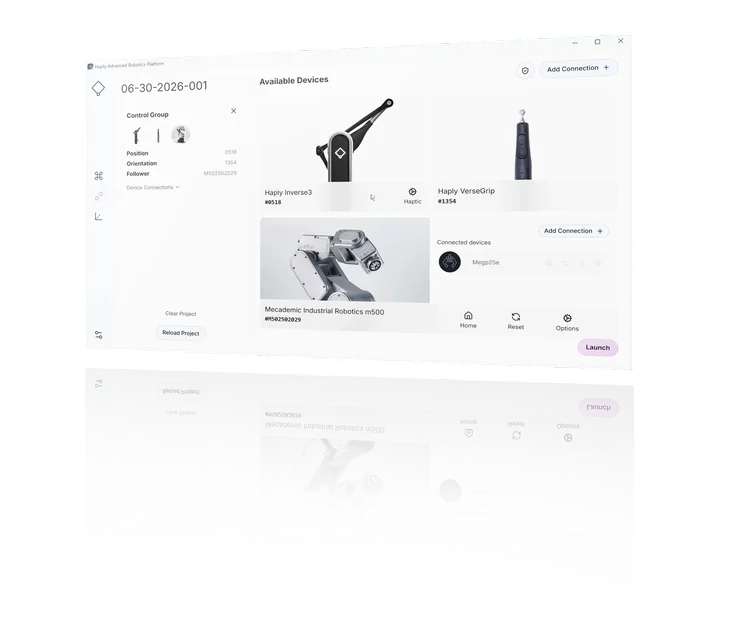
Use haptic control to demonstrate tasks, capture motion trajectories, grasp strategies, and operator corrections that feed robot-learning pipelines and Physical AI workflows.
Industrial and lab automation
Guide, record, and replay precise movements with HARP for repeatable tasks — soldering, pick-and-place, inspection — and keep operators farther from hazardous environments.
RECOMMENDED PRODUCTS
The right instrument.
IN THE FIELD
Proof, not promises.
Deployed with the companies building the next generation of robots.
- CES 2026 Touch-enabled Physical AI training introduced with NVIDIA — plus two CES 2026 Innovation Honoree awards.
- SIGGRAPH 2025 Real-time Physical AI and teleoperation demo using NVIDIA technology, recognized on NVIDIA Isaac on AWS.
- MOVEIT PRO Partnered with PickNik to power real-world robotic applications with intuitive control and learning.
- UR10 Industrial painting through remote expertise: Inverse3 guiding a Universal Robots UR10 — precision at a safe distance.
WORKING WITH
- NVIDIA
- AWS
- PickNik
- BlackBerry QNX
- Universal Robots
- Kinova
- Mecademic
- FundamentalVR
COMMON QUESTIONS
Asked, answered.
Straight answers on fit, integration, and where to start.
How does haptic feedback improve teleoperation?
Force feedback lets operators feel resistance, contact, and texture from the robot's end effector, the same information their hands would have if doing the task directly. This reduces task time, error rates, and cognitive load.
Which Haply product is best for robotics?
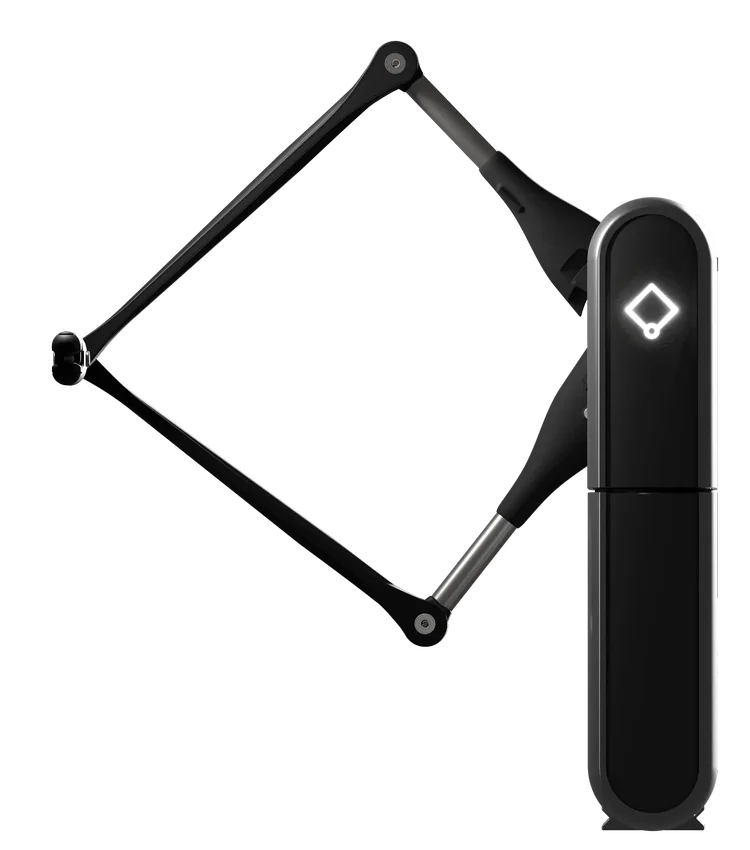
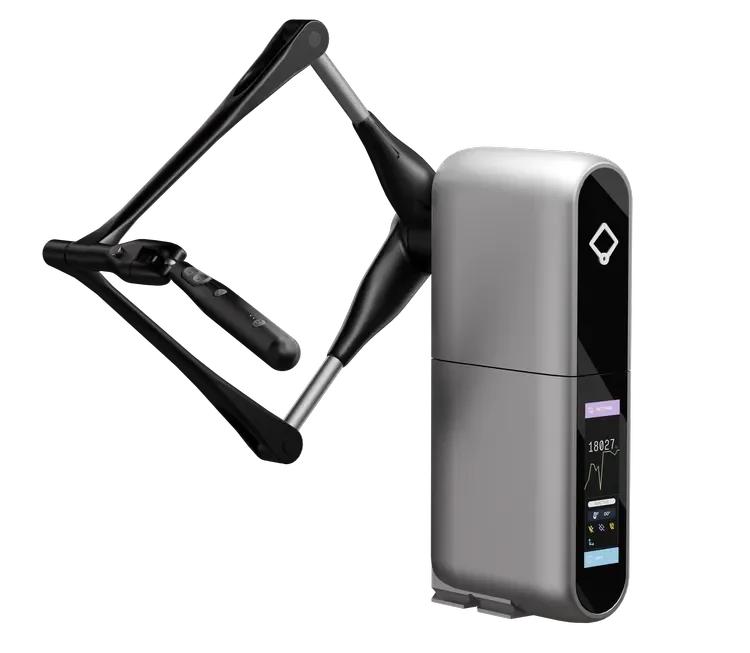
Inverse3 is a common starting point for robotics research and teleoperation. Inverse3x is recommended for enterprise or demanding performance requirements. HARP adds record-and-replay capability for workflow automation.
Does Haply support robotics development workflows?
Haply can support robotics teams exploring custom development or integration paths. The right approach depends on the application, hardware setup, and development requirements, so we recommend speaking with our team to understand fit and scope.
Can Haply be used for drones or mobile robots?
Yes. Haply devices can support teleoperation and remote robotic control workflows for robotic arms, mobile robots, drones, and other remote systems where force feedback, spatial control, or operator input are important. Product fit depends on the hardware, control environment, and integration requirements.
What is the role of haptics in Physical AI and teleoperation?
Haptic input helps robotic systems capture human motion, touch, and intent during teleoperation. In Haply workflows, devices like Inverse3x and HARP can support human-guided robot control, tactile programming, data capture, and physical AI training workflows.
Building a robotics or teleoperation workflow?
Talk to an expert about your control environment, hardware setup, and integration path.