TimesLIVE Explores Why the Next Generation of Robots Needs Touch
Responding to TimesLIVE's CES 2026 coverage: robots that see but cannot feel stay in cages. Touch and force data let them learn from people and work beside them.
Originally published on haply.co — the canonical version of this article.
“Robots get almost real”
In his CES 2026 dispatch for TimesLIVE, technology journalist Arthur Goldstuck surveyed a show floor where robots looked more capable than ever — and asked what still separates them from genuinely useful machines. A recurring answer: tactile capability beyond vision.
What touch data describes
Touch and force data carry information no camera can: precisely when contact occurs, how much force is being applied, and whether resistance is changing as the interaction unfolds. For a robot manipulating fragile, deformable, or unpredictable objects, those three signals are the difference between competence and breakage.
Learning from human demonstration
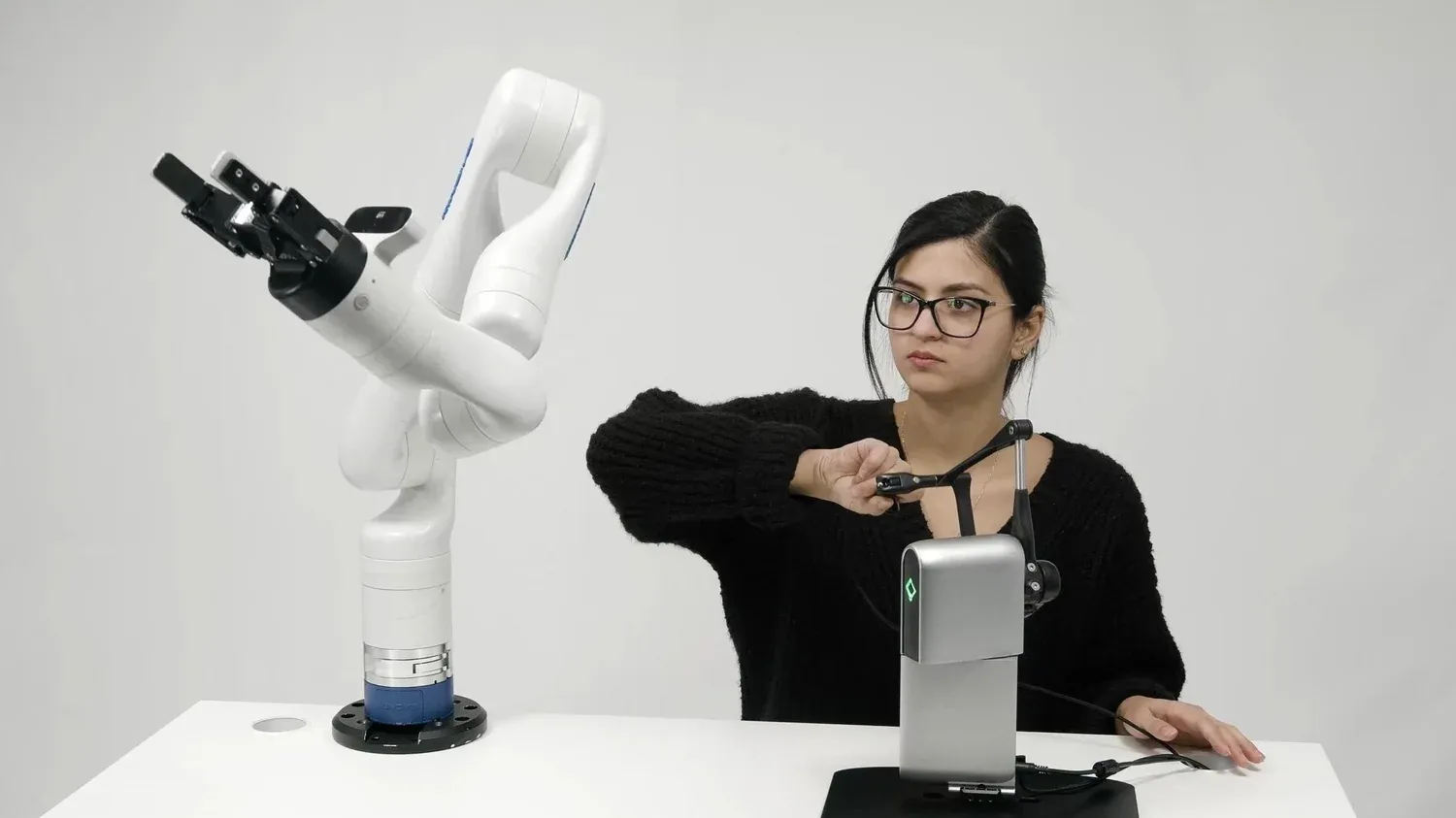
Haply’s haptic interfaces let a person perform a task naturally while the system records the full force-and-motion signature. Robots trained on that data can learn from human demonstration and — critically — operate in unpredictable environments alongside people, rather than behind safety fencing.
Read the original coverage
Arthur Goldstuck’s full article is available at timeslive.co.za.